
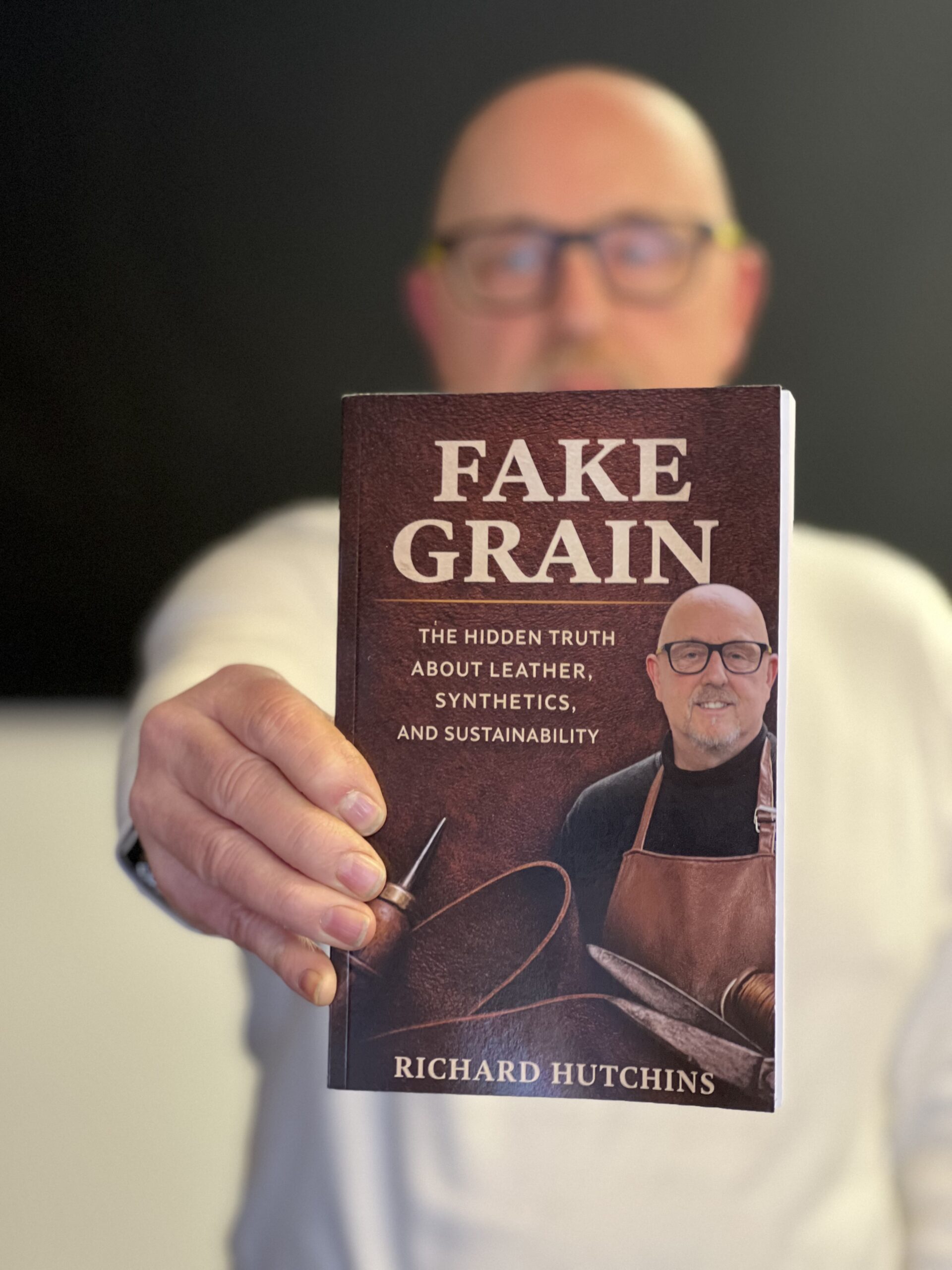
FAKE GRAIN — Leather Isn’t the Enemy, Disposable Culture Is
Modern society has become heavily influenced by perception.
Today, products are often sold less on quality and longevity, and more on emotion, trends, branding, and public opinion. Few industries reflect that shift more clearly than the growing conversation surrounding leather.
Over recent years, leather has increasingly been portrayed as environmentally harmful, unethical, and outdated. Many major brands now proudly announce the removal of leather from their product ranges while introducing synthetic alternatives promoted as cleaner, greener, and more sustainable.
The public applauds.
Campaigns spread quickly online.
And the marketing sounds convincing.
But very few people stop to ask an important question:
What are these alternative materials actually made from?
In many cases, so-called “leather alternatives” rely heavily on polyurethane, PVC, polyester backings, acrylic finishes, and other petroleum-based synthetic compounds. While the terminology may sound environmentally progressive, the reality is that many of these materials are still fundamentally plastic.
That does not automatically make them evil, but it does mean the conversation around sustainability deserves far more honesty and balance than it currently receives.
One of the biggest differences between traditional leather and many modern synthetic alternatives is longevity.
Leather was historically designed to last.
It was repaired, restored, conditioned, re-dyed, stitched, rebuilt, and maintained over decades. Leather boots were resoled rather than discarded. Leather jackets were restored instead of replaced. Leather furniture was cared for and passed through generations.
Entire industries and skilled trades were built around preservation.
Today, much of modern consumer culture works in the opposite direction.
Many products are manufactured with short lifespans, encouraging replacement rather than repair. Synthetic materials frequently crack, peel, delaminate, or deteriorate in ways that are difficult — and sometimes impossible — to restore properly.
When that happens, most products simply end up discarded.
That growing culture of disposability is one of the central themes explored throughout FAKE GRAIN.
Because the environmental issue is no longer just about what products are made from. It is also about how long they survive, whether they can be repaired, and what happens to them once they fail.
As plastic-based materials break down over time, they contribute to the increasing global issue of microplastic pollution. Tiny synthetic particles are now being discovered in rivers, oceans, agricultural soil, marine life, drinking water, and even within the human body.
Scientists have identified microplastics in bloodstreams, lungs, organs, and human tissue. Wildlife continues to be heavily affected, while synthetic waste continues to build across the planet at an alarming rate.
Yet despite this, many plastic-based products continue to be marketed as the ethical future.
That contradiction is difficult to ignore.
FAKE GRAIN does not argue that leather is perfect, nor does it attempt to dismiss legitimate environmental concerns surrounding any industry. Instead, it encourages a more honest discussion around material science, sustainability, craftsmanship, longevity, and consumer behaviour.
Because sustainability is about more than labels.
It is about durability.
Repairability.
Reuse.
Waste reduction.
And understanding the full lifespan of a product.
A well-maintained leather item can remain usable for decades. Many synthetic alternatives struggle to survive a fraction of that time before entering landfill or contributing to long-term plastic pollution.
That difference matters.
The book challenges readers to look beyond marketing slogans and fashionable terminology and start asking deeper questions about the products they buy, the materials they use, and the long-term environmental impact hidden beneath modern branding.
Sometimes the most sustainable solution is not always the newest invention.
Sometimes it is the material humanity has trusted, repaired, reused, and relied upon for hundreds of thousands of years.
Buy your copy of Fake Grain Today